
AAV Vector Characterization with Quantitative TEM
Validated method for precise quantification of full, partial & empty capsids
Accurate characterization of AAV vector content is a critical quality attribute in gene therapy development and manufacturing. In this study, we validated Quantitative Transmission Electron Microscopy (QuTEM) as a robust method for single-particle classification of full, partially filled, and empty capsids, demonstrating strong concordance with established orthogonal techniques.
In collaboration with Viralgen, our recent publication demonstrates how QuTEM can precisely quantify capsid populations and aligns closely with orthogonal techniques including AUC, Mass Photometry, and SEC-HPLC.
QuTEM extends conventional transmission electron microscopy into a quantitative analytical method.
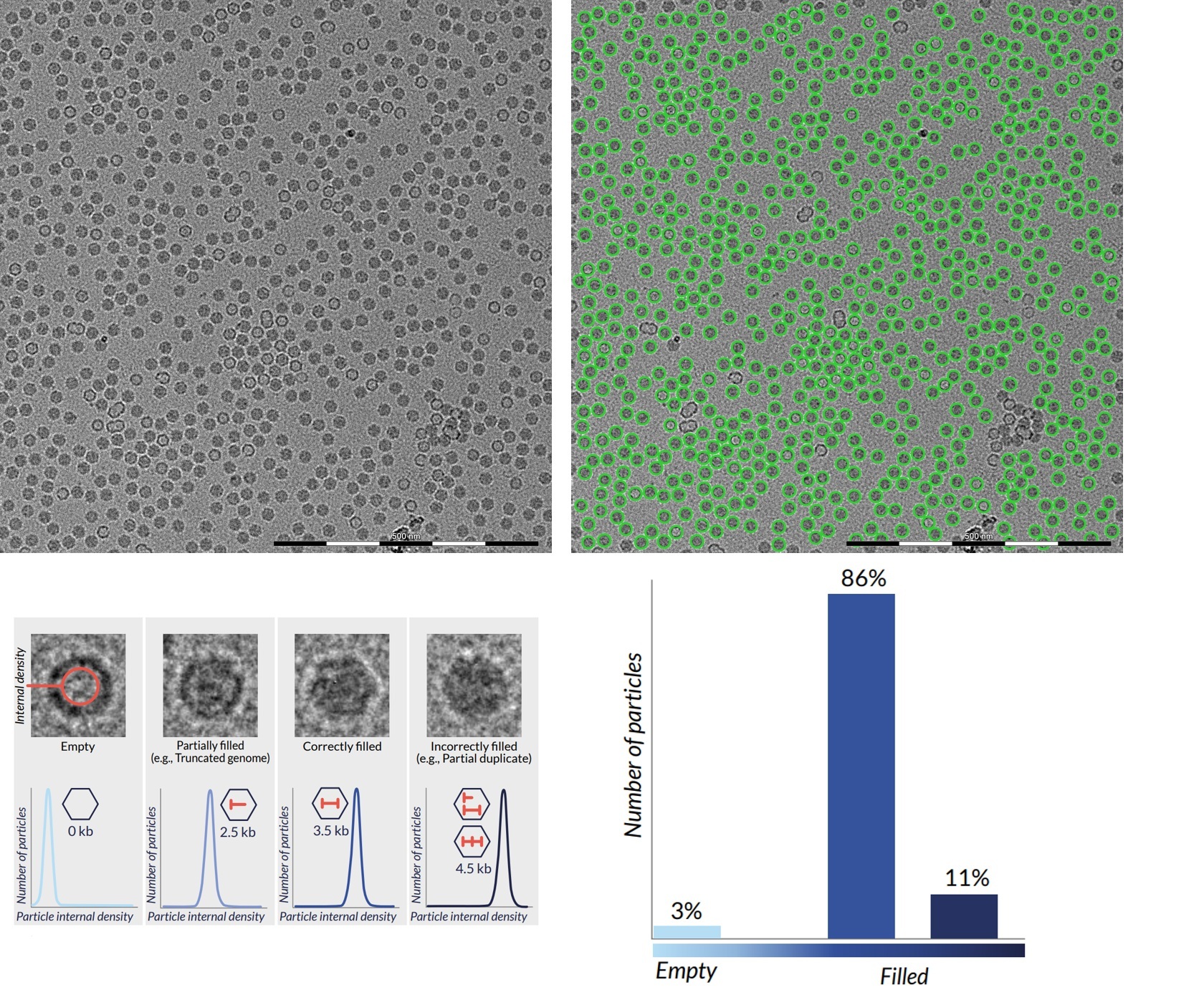
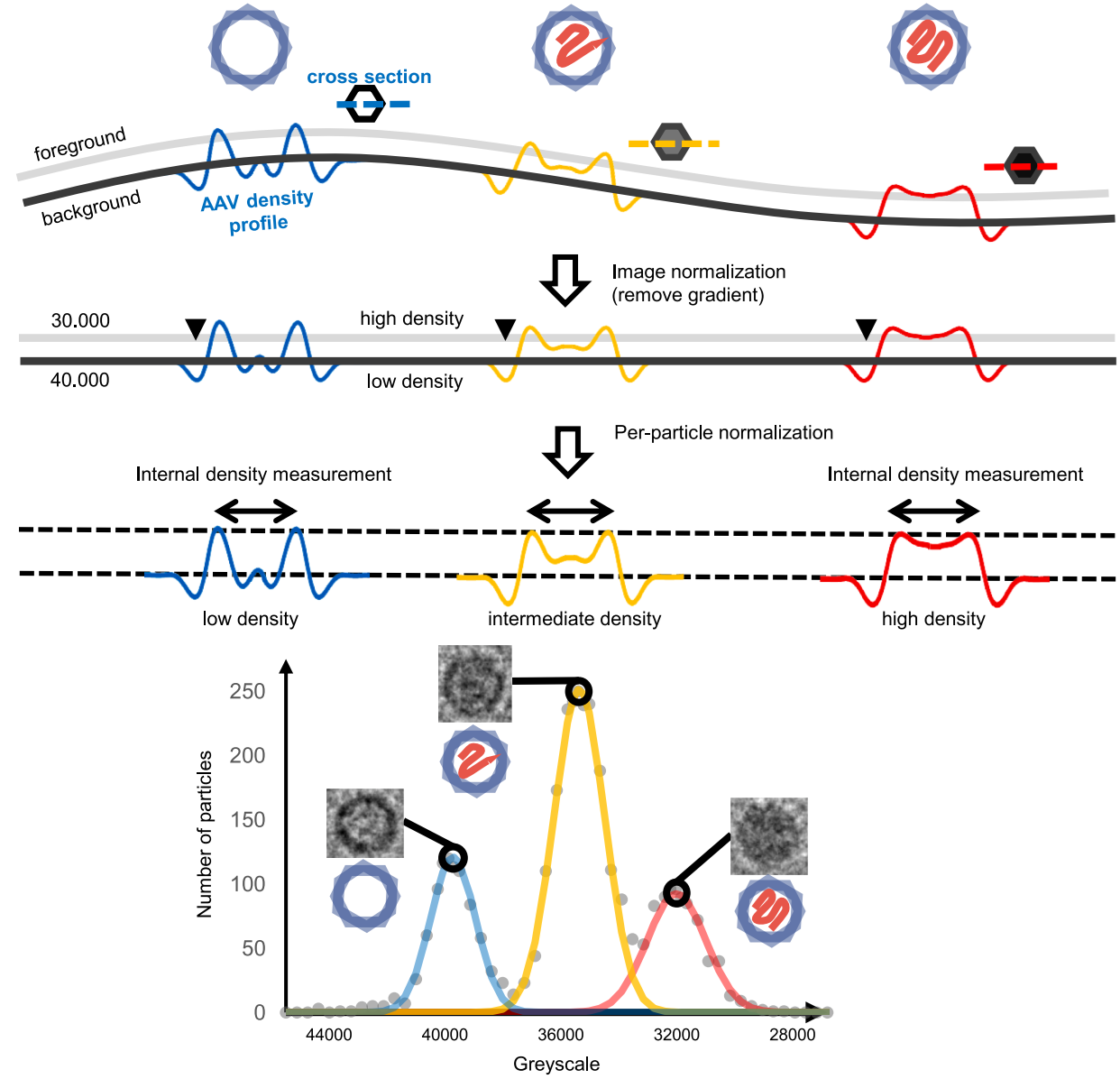
Rather than relying solely on visual inspection, QuTEM measures internal density values at the single-particle level. Each capsid is analyzed and classified based on its internal electron density, enabling objective differentiation between:
- Empty capsids
- Partially filled capsids
- Full genome-containing capsids
From Image to Quantitative classification
Key strengths
Accurate classification of full, partial,
and empty capsids
Consistent across ssAAV and scAAV
Direct visualization of the specimen with
single-particle resolution
Practical impact
Supports process development and comparability studies
Strengthens quality control and regulatory documentation
Complements established methods
such as SV-AUC and Mass Photometry

Orthogonal validation
Benchmarked against established techniques
The comparability study evaluated two different AAV serotypes and included both single-stranded (ssDNA) and self-complementary (scDNA) vectors, ensuring that QuTEM’s performance could be assessed across diverse vector formats.
The results showed that the percentage of empty, partially filled, and full capsids measured by QuTEM aligned closely with established analytical techniques, including Sedimentation Velocity Analytical Ultracentrifugation (SV-AUC) and Mass Photometry (MP).
Related contents
Analyses
At QuTEM, we generally offer the following analyses for AAV particles.


